Two days: Arequipa highlights and a full-day Colca Canyon tour
With only two full days, you can still see the city and the canyon, but there is little margin for a delayed flight, tiredness or altitude symptoms.
Day 1: Explore central Arequipa
Start at Plaza de Armas, the main square, with its arcades and the cathedral along one side. Arequipa’s historic center is known for sillar, a pale volcanic stone used in many of its best-known buildings.
Walk to Santa Catalina Monastery, a walled complex of lanes, cloisters and brightly painted walls. Allow about two hours there; a quick photo stop misses most of it. Then wander the old streets around San Lázaro or visit San Camilo Market to see everyday city life.
At lunch, look for a traditional picantería. Try rocoto relleno (stuffed pepper), ocopa arequipeña (potatoes in a spicy sauce) or soltero de queso, a regional cheese-and-vegetable salad. For a late-afternoon view of the volcanoes, head to the Yanahuara viewpoint.
Keep the evening quiet. The next day starts very early, and Arequipa already sits at about 2,300 m above sea level.
Day 2: Colca Canyon and Cruz del Cóndor
A typical full-day Colca Canyon tour from Arequipa starts in the very early morning, often with a pickup around 3 AM. Exact pickup times and stops vary by operator. The From Arequipa: Colca Canyon Full-Day Guided Tour with Meals (from US$42, 4.6/5 from 1,799 reviews) is the most-reviewed version on GetYourGuide; our Colca day tour guide covers what the day involves.
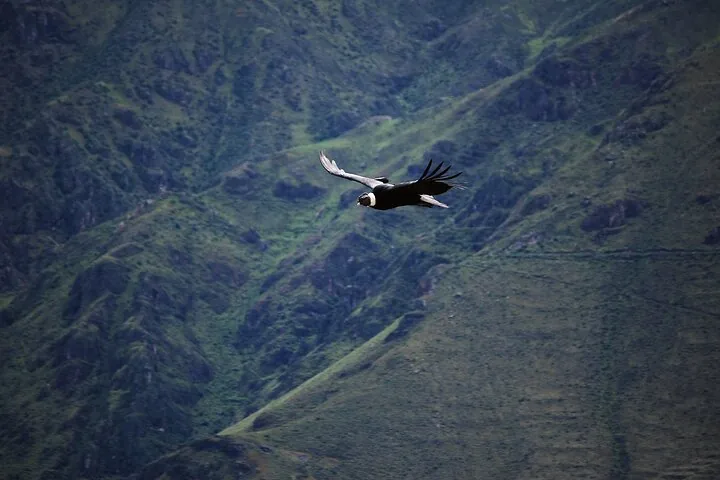
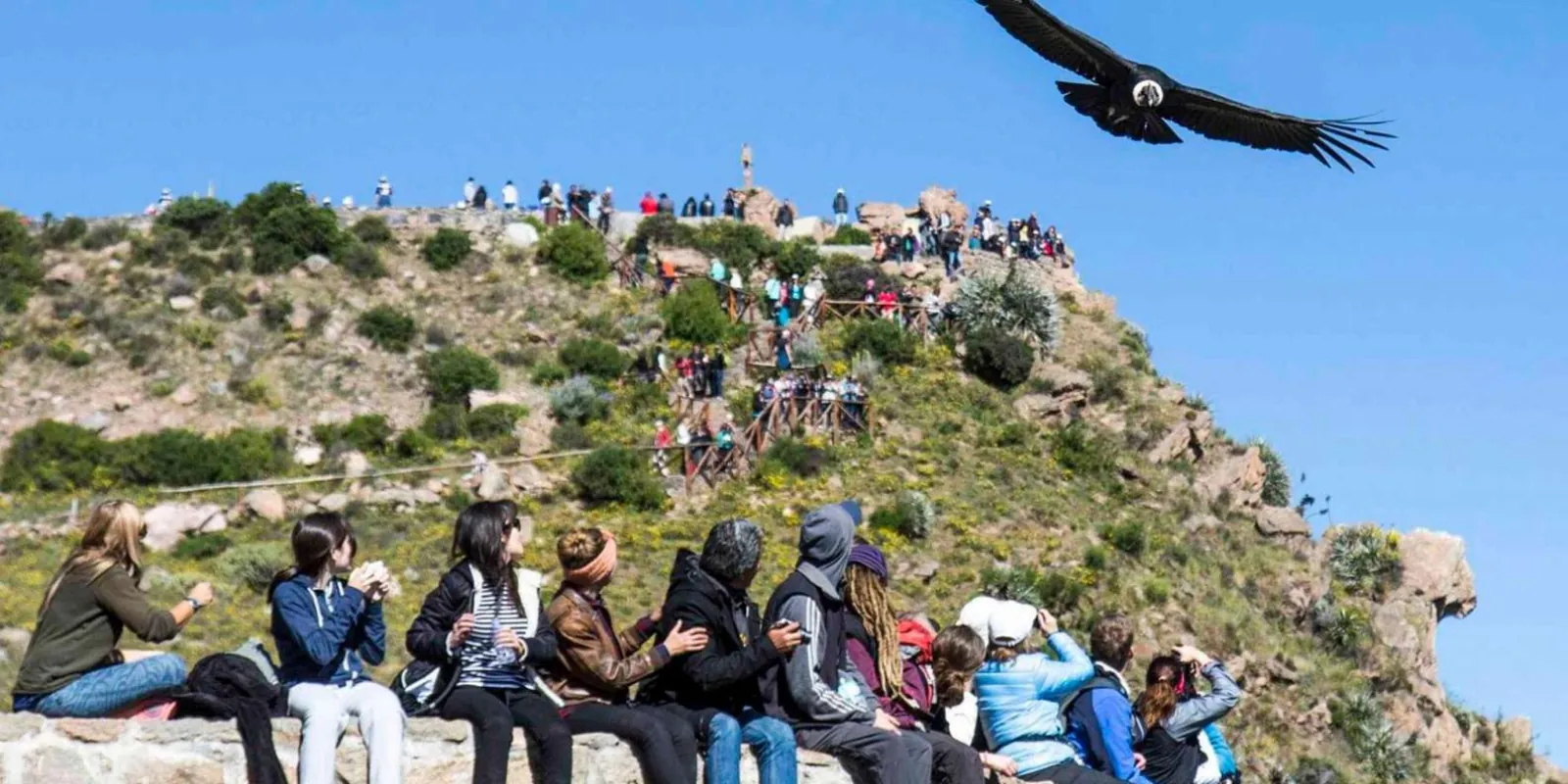
The route usually climbs through the highlands toward Chivay and continues to Cruz del Cóndor, where visitors watch for Andean condors riding the air over the canyon. Sightings are never guaranteed, and tours aim to be at the viewpoint in the morning.
Depending on the itinerary, stops can include traditional villages, terraced fields, another canyon lookout or hot springs. Each extra stop shortens your time at the viewpoint and lengthens the drive home.
Expect many hours in a vehicle. A full-day tour suits you if you want the landscape and the condors without an overnight stay; it does not include hiking down into the canyon.
Choose this plan if you have only two days, do not want a multi-day trek and can handle an unusually long excursion. With more flexibility, the three-day version below is easier on your body and leaves more time at each stop.
Three days: a city day and a night in the Colca Valley
With three days, make the canyon an overnight trip. You no longer have to drive from Arequipa to the main viewpoint and back on the same day, and you get time in the highland villages.
Day 1: Get to know Arequipa
Follow the same relaxed city route: Plaza de Armas, Santa Catalina Monastery, a regional lunch and Yanahuara. You also get some time to adjust after arriving from lower ground, although one day in Arequipa does not acclimatize you for the much higher Colca road.
Day 2: Travel from Arequipa to the Colca Valley
Leave Arequipa in the morning for Chivay, the main gateway to the Colca Valley. Many sightseeing routes cross the Salinas y Aguada Blanca National Reserve, where you may see vicuñas grazing on the high grassland.
Most routes cross the Patapampa pass at about 4,900 m. That is usually the highest point of the trip, even though you are going to a canyon. Drink water as normal, avoid strenuous effort if you have not adjusted to altitude, and tell your guide if you feel unwell.
Once in the valley, you settle into a hotel in Chivay, Yanque or another village on your tour. The afternoon may be free for a short walk, a village visit or the La Calera hot springs complex, depending on the itinerary. The springs charge their own admission, and neither most tours nor the Colca tourist ticket include it; our hot springs guide covers the options.
A Chivay-based sightseeing tour is a different trip from a trek that descends to villages on the canyon floor. The Colca Canyon Plus two-day tour on Viator (from US$104, 4.9/5 from 350 reviews) follows this plan, with hotel pickup in central Arequipa, one hotel night in the valley and breakfast; the park ticket, other meals and the hot springs cost extra. Our two-day Colca tour guide compares other overnight options.
Day 3: Condor watching and the drive back to Arequipa
Leave early for Cruz del Cóndor, about 42 km beyond Chivay. Condors use the rising air along the canyon walls, and mornings are when tours stop here.
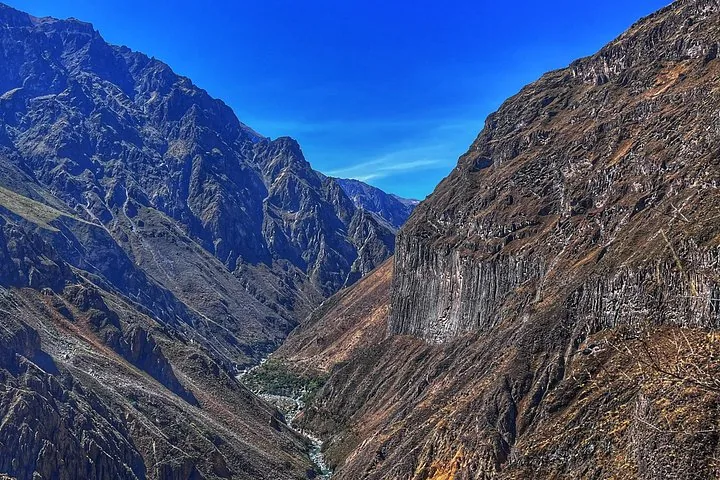
Enjoy the panorama even if the birds stay distant. The cliffs, steep slopes and farmed terraces are half the reason to come. Many sightseeing tours stop at villages or viewpoints on the way back.
You reach Arequipa later that day. Avoid booking a tight flight straight after the tour: the road is long, and weather, traffic or operator changes can shift your arrival.
Choose this plan if you want Colca’s main sights, condor watching, some village time and a night in the valley without a demanding hike.
Four days: a slower pace or a canyon trek
Four days gives you two good ways to combine Arequipa and Colca Canyon.
Option A: Two days in Arequipa and two in Colca
This version suits travelers who care most about culture, scenery and an easier schedule.
- Day 1, historic Arequipa: Plaza de Armas, Santa Catalina Monastery, San Lázaro and a traditional lunch.
- Day 2, more of Arequipa: visit the Ruta del Sillar quarries with a tour, see a museum, enjoy Yanahuara or keep the day for rest and acclimatization.
- Day 3, into the Colca Valley: travel to Chivay or Yanque, see the valley and stay overnight.
- Day 4, Cruz del Cóndor: visit the viewpoint and return to Arequipa with spare time after the scheduled arrival.
Two city days help if you have flown in from sea level and want a gentler start. Chivay, at about 3,600 m, still sleeps much higher than Arequipa, so the route can feel fast for some people even with the extra day.
Option B: Two days in Arequipa and a two-day canyon trek
If hiking is your main reason to come, use the first two days for Arequipa and preparation, then give days three and four to an organized two-day trek.
Treks usually start near Cabanaconde and descend into the canyon, with a night on the lower trail before a steep climb out. Trails and lodges depend on the operator. The ascent can be hard work, especially in heat or at altitude, and it has little in common with a two-day sightseeing tour by vehicle.
Two well-reviewed versions are the From Arequipa: 2-day Colca Canyon Trekking Tour (from US$60, 4.5/5 from 256 reviews) on GetYourGuide and Colca Trekking 2days from Arequipa on Viator (from US$85, 4.7/5 from 287 reviews). Our two-day trek guide sets out the route and what each includes.
Option B works best for confident hikers who have already adapted to altitude and checked the elevation gain, walking times and trail conditions. If you want an easier hike or more time in the canyon, add a day for a three-day trek, such as Colca Canyon Trekking - 3 Days on Viator (from US$265, 4.9/5 from 24 reviews), a small review base so far; the three-day trek guide compares the options.
Which Colca Canyon tour fits the plan
You are choosing between one day and two, and between sightseeing and trekking.
| Tour style | What you do | Suits | Our pick |
|---|
| Full-day sightseeing tour | Drive from Arequipa to the main viewpoints and back | Short stays | Full-day tour with meals, from US$42, 4.6/5 (1,799) |
| Two-day sightseeing tour | Travel through the valley, sleep in a hotel, visit Cruz del Cóndor | First-time visitors who want a balanced pace | Colca Canyon Plus, from US$104, 4.9/5 (350) |
| Two-day trek | Descend into the canyon, sleep below and climb out | Fit, prepared hikers | 2-day trekking tour, from US$60, 4.5/5 (256) |
| Three-day trek | Trek at a less compressed pace | Hikers who want more time on foot | 3-day trek, from US$265, 4.9/5 (24) |
| Private tour | A dedicated vehicle and a more flexible schedule | Families, photographers and small groups | Private round-trip transfer, from US$180, 5.0/5 (22) |
When comparing offers, check the route, pickup and drop-off points, hotel category, meals, guide language, cancellation terms, the tourist ticket and any optional activities. The cheapest headline price does not always give the lowest final cost; our Colca tour prices guide adds up the extras.
Where to stay: Arequipa, Chivay, Yanque or Cabanaconde
Arequipa is the natural start and end point for most trips. Its historic center has the widest choice of restaurants and city sights.
Chivay is a practical overnight hub for standard sightseeing tours. It has hotels, local services and the valley’s main road.
Yanque suits travelers who want a quieter village and valley views. Check your hotel’s transfer arrangements, because not every tour collects guests there.
Cabanaconde matters most if you are starting a canyon trek or hiking independently. It lies farther along the valley than Chivay, so it adds travel time.
On a two-day trip, returning to Arequipa after the tour is usually simplest. For three or four days, one night in the valley balances road time and sightseeing. Our where to stay in Colca Canyon guide compares the towns in more detail.
How to get from Arequipa to Colca Canyon
You can organize the journey in three broad ways:
- Organized day or overnight tour: the easiest choice if you want hotel pickup, a planned route and viewpoint stops. Confirm what is included.
- Public buses and local transport: more independent, but you have to check timetables, connections and final stops yourself. A bus to Chivay does not necessarily get you to Cruz del Cóndor when you want to be there. Our Arequipa to Colca by bus guide covers the terminal, companies and fares.
- Private driver or transfer: useful for groups or if you want control over stops and timing, but it usually costs more. The Private Round Trip Transfer to Colca Canyon from Arequipa (from US$180, 5.0/5 from 22 reviews) includes a bilingual driver but not a separate guide; see our private tour guide.
Chivay is the gateway, not the whole destination. Some treks continue toward Cabanaconde, and some itineraries carry on from the valley to Puno instead of returning to Arequipa. If you plan to continue to Puno, book that route on purpose, because many Colca tours do not include it. The Colca Canyon: 2-Day Tour from Arequipa to Puno (from US$107, 4.8/5 from 51 reviews) is the best-reviewed GetYourGuide option that ends in Puno; our Arequipa to Puno via Colca guide explains the logistics.
Colca Canyon entry fees and what to budget for
Visitors to the Colca tourist circuit need the Boleto Turístico, issued by AUTOCOLCA, the local authority. Its published standard adult rates are:
| Visitor category | Tourist ticket |
|---|
| International visitor from outside Latin America | S/70 |
| Latin American visitor | S/40 |
| Peruvian adult | S/20 |
Children aged 6 to 15, students, seniors and foreign residents have lower rates with the right documents; foreign children pay S/20. The ticket covers entry to the tourist circuit only. It does not pay for a guide, transport, the La Calera hot springs or the Uyo Uyo archaeological site. Check the current rate before you travel, and ask whether your tour price includes the ticket; many do not.
Also budget for excluded meals, drinks, hot springs, tips and any hotel upgrade. To compare options fairly, work out the total cost per person, not just the headline tour price.
Altitude: the biggest planning factor
Arequipa sits at about 2,300 m. Chivay is at about 3,600 m, and the road to Colca reaches roughly 4,900 m at Patapampa. That climb happens within a few hours of leaving the city, even if you plan no serious hiking.
Going up too fast can cause altitude illness, with headache, nausea, dizziness and unusual tiredness among the symptoms. Being fit does not protect you. Gain height gradually where you can, and speak to a travel-health professional before a rapid ascent if you have concerns or a history of altitude problems.
Do not keep climbing while you have altitude-illness symptoms. Get a medical assessment; worsening symptoms, confusion, trouble walking or breathlessness at rest need urgent attention and descent. The CDC’s high-altitude travel guidance explains the warning signs, and our Colca altitude guide applies them to the canyon routes.
This is one reason a four-day plan with time in Arequipa can be wiser than flying into the city and leaving at once on a high-altitude excursion.
Best time of year to combine Arequipa and Colca Canyon
You can visit Colca Canyon all year, but the Andean seasons change the trip.
April to October is generally the drier period, with clearer conditions more often but cold mornings and nights at altitude. November to March is broadly the wetter period in the Andes, and rain can affect trails, visibility and roads. These are seasonal patterns, not guarantees for a given date.
If you travel between November and February, be careful about planning a demanding trek without spare days. Choose an operator who can explain weather-related route changes, and check local forecasts close to departure. On a sightseeing trip, pack waterproof layers as well as warm ones. Our best time to visit guide has the month-by-month detail.
Condor sightings depend on conditions and the birds themselves, not on a fixed daily schedule. Plan the trip around the valley as a whole, with condors as a likely but not certain extra.
What to pack for an Arequipa and Colca Canyon trip
- A warm fleece or insulated jacket for the cold early starts and the high pass
- A light waterproof layer in the wetter months
- Comfortable walking shoes, or proper hiking footwear if you are trekking
- Sunscreen, sunglasses and a hat for strong high-altitude sun
- Drinking water, snacks and any medication you take routinely
- Some cash in Peruvian soles for tickets and local costs
- Your passport or accepted ID for ticket categories and hotel check-in
- A small overnight bag if your tour leaves your main luggage in Arequipa
On an overnight sightseeing tour, you usually need no specialist trekking gear. For a canyon-floor trek, ask the operator for a route-specific packing list and whether you carry your own bag. Our Colca packing list has the full version.
Choosing between the plans
On a first visit with a choice, give Arequipa and Colca Canyon three days, or four if you want to see Arequipa properly. A city day, a night in the valley and a morning at Cruz del Cóndor make a more comfortable trip than squeezing the canyon into one exhausting day.
If hiking is the priority, swap the overnight sightseeing tour for a trek and leave enough time to prepare for the altitude and the steep canyon trails. Whichever plan you pick, compare the full itinerary and inclusions before booking, because two tours of the same length can cover very different ground.
Sources