Is Chivay worth visiting?
Yes, as an easy base for the Colca Valley. Most of what you come for lies outside the town itself.
Chivay’s appeal is what surrounds it: terraced fields, mountain views, traditional villages, hot springs and the road toward the condor viewpoints. The compact center has what you need day to day: a meal, a taxi, bus departures and supplies.
It is a good overnight choice if you:
- Are taking a two-day Colca Canyon sightseeing tour and want to avoid a rushed same-day return to Arequipa.
- Want to soak at the La Calera hot springs after an afternoon of sightseeing.
- Plan to visit Cruz del Cóndor early the next morning.
- Need accommodation, food and transport in one easy-to-reach town.
- Prefer sightseeing by road to a steep descent into the canyon.
Pick Yanque instead for a quieter countryside stay, or Cabanaconde if your main goal is to trek down into the canyon. Each suits a different itinerary.
Best things to do in Chivay and nearby
1. Relax at La Calera hot springs
La Calera is the best-known leisure stop near Chivay. Peru’s official tourism inventory (MINCETUR) places the municipal thermal-bath complex about 3 km from Chivay, around 10 minutes by combi from the plaza, at 3,610 m. You cross a suspension bridge over the Colca River to reach the pools.
The same inventory says the water leaves its volcanic source at around 80–85 °C and is cooled in settling tanks before it reaches the pools, where it sits between 38 °C and 40 °C. There are five pools: two open-air pools under shade netting for visitors, two covered pools (one with a dry steam room) and one reserved for older adults. The inventory recommends no more than 45 minutes in the water.
Practical tips:
- Take a short taxi or combi ride; ask your hotel for the current pickup point and fare.
- Bring swimwear, a towel, sandals and a dry change of clothes.
- Ask about changing rooms, lockers and which pools are open when you arrive.
- Check whether your Colca tour includes the stop and whether admission is extra.
- Keep soaks short, especially if you feel light-headed or are still adjusting to the altitude.
Admission: MINCETUR’s inventory lists S/15 for foreign visitors and S/10 for Peruvians at the two main visitor pools, with lower local rates at the others. Treat those as reference rates and ask at the entrance for the current charge. The listed hours run from 4 a.m. to 7 p.m. all year, with closing times that vary by pool.
Important: The Colca tourist ticket does not include La Calera, so budget for the baths separately. La Calera is a different site from the Chacapi and Yanque baths that many tour itineraries use; our Colca hot springs guide explains which pools tours actually stop at.
2. Explore Chivay’s main square and town center
The Plaza de Armas is the natural place to start a relaxed walk. You can see the church, everyday local life and the surrounding highlands, then stop for a meal or a drink. Chivay is a working regional town, not a museum or an entertainment district, so an hour or two covers it.
Leave time for the market stalls and small shops if they are open. You may find local textiles, snacks and everyday goods. Ask before taking close-up photos of people, and look for sellers who make what they sell; not every item labelled handmade comes from the valley.
If you arrive late in the afternoon, a short walk and dinner may be enough. The point of staying is an unhurried night before your early canyon excursion.
3. Visit Cruz del Cóndor the next morning
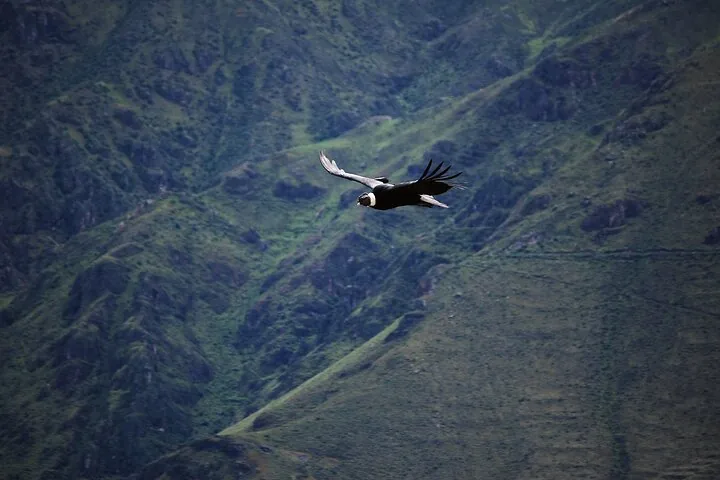
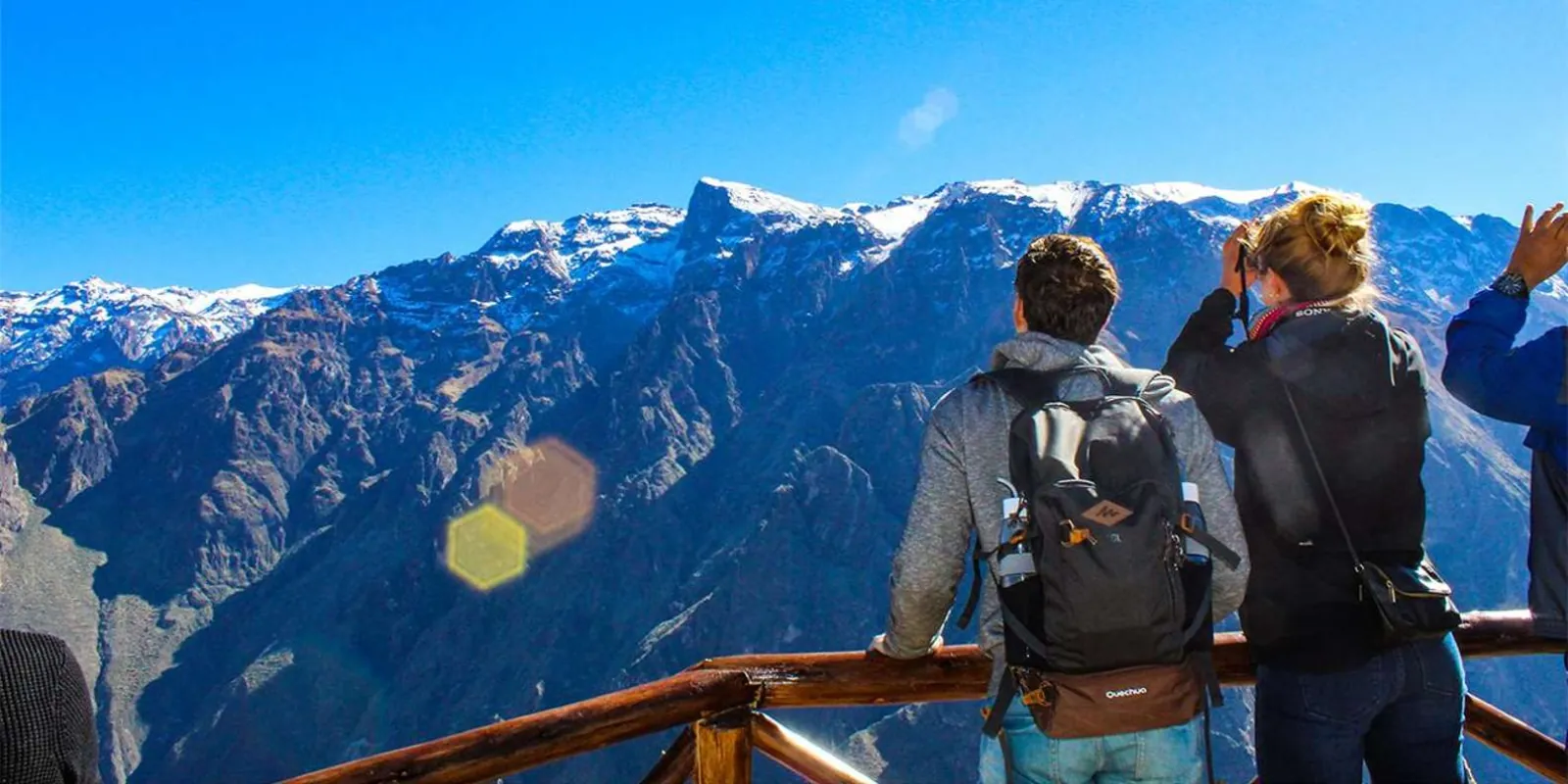
Cruz del Cóndor is the most famous viewpoint in Colca Canyon. It is a road-accessible lookout where visitors watch for Andean condors gliding above the canyon walls.
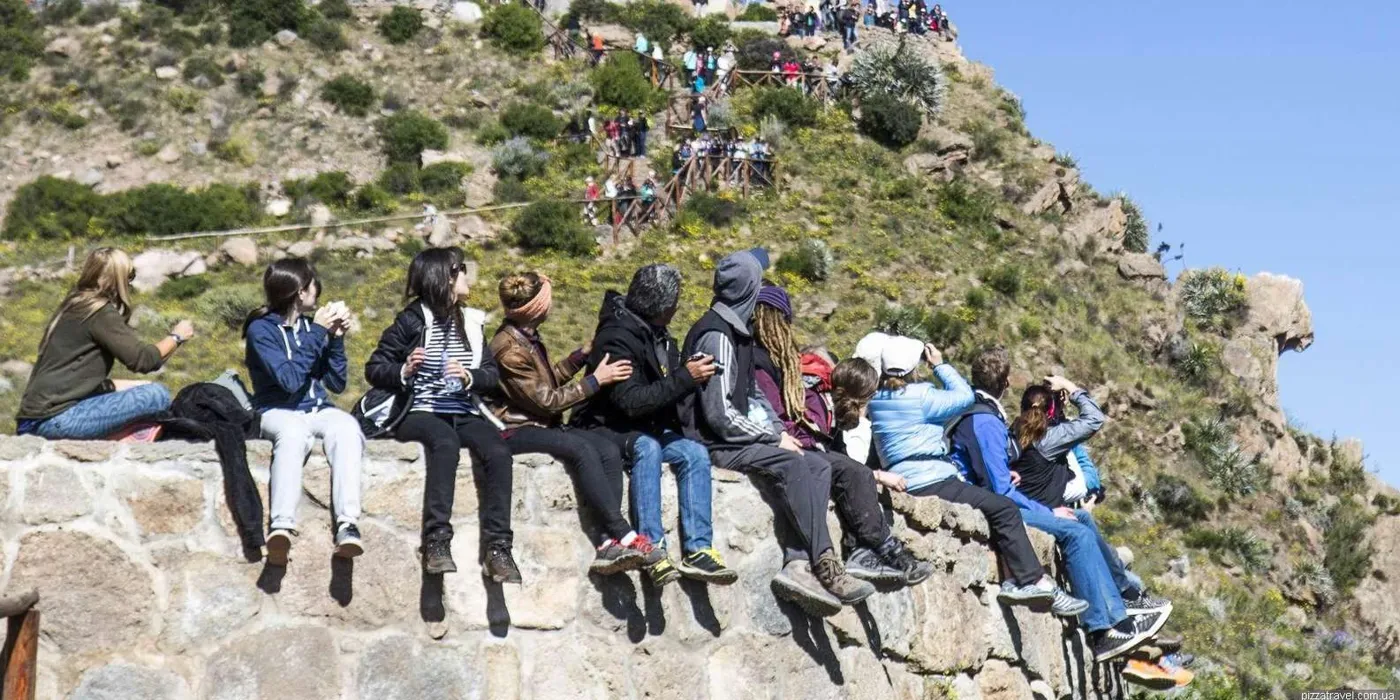
Peru’s tourism portal puts it about 42 km from Chivay, around one hour by road in good conditions. Most visits happen in the morning, when condors are often active as the air warms and starts to rise, but sightings are never guaranteed.
A good plan:
- Leave Chivay early enough to reach the lookout during the main morning viewing period.
- Stop at terraces and villages along the road if your transport schedule allows.
- Plan a proper stop at the lookout; two minutes for a photo is too short to see much.
- Continue to another village or head back toward Chivay, depending on your onward route.
Bring warm layers even on sunny days. The lookout can be windy and the highland sun is strong. Stay behind the barriers and keep your distance from wildlife.
You do not need to hike into the canyon to see Cruz del Cóndor. A sightseeing tour or a prearranged driver is the practical choice if you are short on time; our Cruz del Cóndor guide covers timing in more detail.
4. Enjoy the Colca Valley terraces and viewpoints
The valley is famous for its agricultural terraces (andenes), which trace long patterns along the slopes. Families still farm them today.
The drive through the valley is worth it even when cloud cuts your chances of seeing condors. Stop for the panoramas, the villages and the contrast between green irrigated fields and the dry mountains above them.
Many viewpoints are short stops beside narrow mountain roads. Use the established pull-offs, and do not stop a vehicle on the road or walk onto cultivated land for a photo.
5. Visit Yanque, Achoma and Maca
The road west from Chivay toward the canyon passes villages that make the drive more interesting than a run straight to one lookout.
Yanque is a popular choice for quieter accommodation, valley views and rural activities, and a good fit if you want a relaxed hotel or lodge. Depending on your plans, you can also visit village sites or book a guided countryside walk.
Achoma gives you farmland and village scenery along the valley route. Most visitors treat it as a short stop, not an overnight base.
Maca is a regular stop on Colca sightseeing routes, known for its church and village setting. Look around respectfully if your itinerary includes it, and check whether the church is open; it is not always accessible.
AUTOCOLCA, the authority that runs the visitor circuit, lists Yanque, Achoma, Maca and Cabanaconde on the left-bank route that leads to Cruz del Cóndor.
6. Try regional food
Chivay is a convenient place to try Andean food. Menus vary, but you may find alpaca dishes, trout, quinoa soups, potatoes and local grain dishes. Some restaurants mainly serve tour groups; others serve simple local meals.
Ask what is freshly prepared, mention any dietary needs and check whether the menu price includes a service charge. Carry some soles for small places, even if your hotel takes cards.
7. Continue to Cabanaconde for canyon trekking
If the classic Colca Canyon trek is the main point of your trip, you will want to reach Cabanaconde, the village where many routes start down toward Sangalle and the canyon settlements. Our Arequipa to Cabanaconde guide covers that leg.
Chivay works as an intermediate stop, but sleeping here does not remove the extra drive to the trailhead. If you book a two-day trek, ask the operator whether the night is in Chivay, Cabanaconde or a lodge inside the canyon. Each means a very different itinerary and level of effort. The From Arequipa: 2-day Colca Canyon Trekking Tour (from US$60, 4.5/5 from 256 reviews) sleeps in the canyon; our two-day trek guide sets out the route.
Where to stay: Chivay, Yanque or Cabanaconde?
Choose the town before the hotel. Central Chivay suits bus travelers and first-time visitors who want restaurants and transport within walking distance. Yanque suits a quieter lodge stay if your transfers are arranged. Cabanaconde suits trekkers who want to start down the trail early. Smaller villages such as Maca have the fewest services, so confirm onward transport before booking there.
Our where-to-stay guide compares named hotels in each town, with prices and a map. Whatever you book, check the property’s real position on a map (some “Chivay” listings sit outside town), whether the room has heating or enough warm bedding, and whether breakfast is served before an early departure.
How to get to Chivay from Arequipa
You have three main options: an organized tour, public transport or a private vehicle with a driver. Our guide to getting from Arequipa to Colca Canyon compares them side by side.
Option 1: Two-day sightseeing tour
This is the simplest arrangement for many first-time visitors. A typical itinerary includes transport from Arequipa, stops on the highland road, a night around Chivay and a morning trip to Cruz del Cóndor.
Our pick: Colca Canyon Plus two-day tour on Viator (from US$104, 4.9/5 from 351 reviews), with hotel pickup in central Arequipa, one hotel night in the valley and breakfast; the park ticket, other meals and the hot springs cost extra. Our two-day Colca tour guide compares other overnight options.
Before booking, check:
- Whether accommodation is included and where it is.
- Whether pickup and final drop-off are in Arequipa or somewhere else.
- Whether La Calera is a scheduled stop or an optional extra.
- Whether the AUTOCOLCA tourist ticket, hot-spring admission and meals are included.
- Whether day two returns to Arequipa or continues to Puno.
For Puno, the Colca Canyon: 2-Day Tour from Arequipa to Puno (from US$107, 4.8/5 from 51 reviews) travels to Chivay, visits Cruz del Cóndor on day two and continues by tourist coach to Puno; accommodation and meals are extra.
A two-day sightseeing tour is not the same product as a two-day canyon trek. The first travels mostly by road; the second includes a steep descent and climb.
Option 2: Public bus to Chivay
Public buses run for independent travelers. The official inventory gives about 151 km from Arequipa’s bus terminal to Chivay’s, with a reference journey of around three hours; plan for three to four hours or more depending on stops, road conditions and the service.
Check the departure terminal, company, timetable and baggage rules before you travel. For the return, confirm your departure in person or with the bus company; old online timetables are often out of date.
To reach the condor viewpoint from Chivay you also need onward transport. The bus that brings you to town does not double as a sightseeing shuttle to Cruz del Cóndor.
Our Arequipa to Colca Canyon by bus guide covers companies, terminals and the onward connections to Cabanaconde.
Option 3: Private driver or transfer
A private vehicle suits flexible village and photo stops, small groups and stays at rural lodges. Ask whether the quote is one-way or round-trip, how many hours of waiting it includes, and whether any admissions or guiding cost extra.
Our pick: the Private Round Trip Transfer to Colca Canyon from Arequipa on Viator (from US$180, 5.0/5 from 22 reviews), which includes a bilingual driver but no separate guide; the review base is still small. Our private tour guide compares options.
If you are continuing to Puno, ask for a quote for that route; an Arequipa–Chivay driver may not offer the through journey.
Can you visit Cruz del Cóndor from Chivay without a tour?
Yes, if you arrange road transport. Options include a local bus or shared van heading toward Cabanaconde, a taxi or a locally booked driver. Bus departure times and stops may not match the best viewing window.
Before leaving Chivay, confirm:
- The exact departure point and time.
- Whether the service stops at Cruz del Cóndor or only in a nearby village.
- How you will get back and when the last suitable return leaves.
- Whether the roadside stop is safe and permitted.
- Ticket and ID requirements for the Colca tourist circuit.
If you have only one morning and condors are the main goal, an organized excursion often pays for itself in predictable timing. Our guide to Colca Canyon without a tour covers the independent route in full.
The best Chivay itinerary: one night or two?
Our Arequipa and Colca Canyon itinerary fits these plans into a two-, three- or four-day trip.
One-night itinerary: classic sightseeing trip
Day 1: Arequipa → Chivay → La Calera
- Travel from Arequipa, with time for the highland scenery and comfort stops.
- Reach Chivay, check in and have lunch or an early dinner.
- Spend the afternoon at La Calera if you feel well and the baths are open.
- Take a short walk around the center and rest before an early start.
Day 2: Cruz del Cóndor → valley villages → onward travel
- Leave early for the viewpoint.
- Visit Cruz del Cóndor, with stops in Yanque, Achoma or Maca as your route allows.
- Return to Arequipa or continue on a prearranged onward transfer.
Best for: visitors who want the main canyon scenery without trekking or several nights away from Arequipa.
Two-night itinerary: slower Colca Valley stay
Day 1: Transfer from Arequipa, check in and explore Chivay.
Day 2: Visit Cruz del Cóndor and a few valley villages, then return for a relaxed afternoon at La Calera or in a village, depending on where you stay.
Day 3: Breakfast, perhaps a short guided walk if weather and altitude allow, then back to Arequipa or on to your next stop.
Best for: photographers, travelers who want a quieter pace, and anyone who would rather spend time in the valley than rush between stops.
If you only have one day
A same-day trip from Arequipa is possible but long. Driving to Chivay does not get you to the canyon viewpoint, so a scheduled full-day tour is more practical than stringing together bus connections. The From Arequipa: Colca Canyon Full-Day Guided Tour with Meals (from US$42, 4.6/5 from 1,807 reviews) stops in Chivay for a buffet lunch; pickups start at around 2:45–3:20 a.m. Our Colca day tour guide covers what the day involves.
Colca Canyon entrance tickets and what they cover
On the Colca tourist circuit, budget for the AUTOCOLCA Boleto Turístico unless your tour clearly includes it. AUTOCOLCA’s published rates:
| Visitor category | Published ticket price |
|---|
| Foreign adult (non-Latin American) | S/70 |
| Latin American adult | S/40 |
| Peruvian adult | S/20 |
| Foreign child aged 6–15 | S/20 |
AUTOCOLCA also lists lower rates for eligible Peruvian children, students and older adults. Check the current conditions and the ID each category needs before you buy.
The ticket covers entry to the designated tourist circuit. It does not include transport, a guide, the La Calera hot springs or the Uyo Uyo archaeological complex. A tour package may add some of these, so check the exact inclusions.
AUTOCOLCA has a ticket control point at the entrance to Chivay and sells tickets online. The hot-spring ticket is a separate purchase. Our Colca Canyon tour prices guide shows how the ticket fits into a full trip budget.
Rates checked on AUTOCOLCA’s site on 5 November 2026; they can change.
Weather in Chivay: November to February and the rest of the year
Chivay has a high-altitude climate with sharp contrasts between sun and shade, day and night, and wet and dry months.
May to October: usually the drier part of the year, good for road sightseeing and clear valley views. Nights and mornings are still cold.
November to February: the move into, and then the heart of, the wet summer season. Expect cloud, rain and changeable road conditions. The valley turns green, but visibility at the viewpoints and road timings are harder to predict.
March to April: conditions can stay unsettled before the dry season sets in.
These are seasonal patterns; check the forecast closer to your date. In the wet months, keep your schedule flexible and check road conditions and any trail restrictions locally. Do not book a flight that leaves soon after a long mountain-road journey. Our best time to visit Colca Canyon guide goes month by month.
Altitude and comfort: what visitors should know
At roughly 3,600 m, Chivay is much higher than central Arequipa, and the road crosses higher passes before dropping into the valley. If you arrive straight from low elevation you may feel breathless or develop altitude illness.
Practical precautions:
- Spend time in Arequipa or at another intermediate elevation before strenuous activity.
- Take the first day gently and drink enough water.
- Avoid heavy exertion and a lot of alcohol if you feel unwell.
- Ask a doctor about altitude precautions if you have a relevant medical condition or have had symptoms before.
- Get medical help for worsening symptoms and do not keep climbing with suspected altitude illness. Severe symptoms need urgent assessment and descent where possible.
Hot springs do nothing to treat altitude sickness. If you feel dizzy, faint or unwell, skip the pools and get help. Our Colca altitude guide has more.
What to pack for a Chivay overnight stay
- Warm jacket and layers for early mornings and evenings.
- Waterproof outer layer in the rainy season.
- Sunglasses, sunscreen and a hat for the high-altitude sun.
- Comfortable walking shoes for town and viewpoints.
- Swimwear, sandals and a towel if you plan to visit La Calera.
- Cash in soles for small businesses and admissions.
- Passport or official ID for the tourist ticket and your hotel.
- Water, snacks and any medication you normally take.
- Power bank and charging cable if you photograph all day.
For a road-based overnight visit you can leave heavy trekking gear behind. If you plan to hike into the canyon, use a route-specific list such as our Colca packing guide.
Common mistakes when planning Chivay
Assuming Chivay is the condor viewpoint. The lookout is still about 42 km away. Allow time and transport for that leg.
Booking a room without checking the location. A countryside property may need a taxi for every outing; a central hotel is easier for bus travelers.
Confusing a two-day sightseeing tour with a two-day trek. They differ in route, physical effort and where you sleep.
Leaving the return unplanned. If you use public transport, confirm your ride back toward Arequipa before you commit to an excursion.
Assuming the hot springs are included. The Colca tourist ticket and La Calera entry are separate charges.
Ignoring altitude and weather. Build in rest and some slack in the schedule, especially in the wet months.
Final recommendation: Is Chivay the right base for you?
If your Colca plan includes a comfortable night, the La Calera hot springs, village scenery and Cruz del Cóndor, Chivay is the most practical base. You get an easy introduction to the valley without a hard trek.
If hiking to the canyon floor is the goal, look at Cabanaconde and the trail you plan to use. For a quieter lodge stay, compare Yanque. With only one day to spare from Arequipa, book a full-day tour instead of piecing together buses and sightseeing stops.
Choose the base to match your route, not the name that sounds closest to the canyon. Check your dates against the tour or bus schedule before you book, because departures change with the season.
Sources
Checked 5 November 2026. Distances, ticket rates and admission figures are published references and can change.
- Peru’s official tourism portal: Colca Canyon: Arequipa–Chivay and Chivay–Cruz del Cóndor distances, activities and the standard tourist circuit.
- AUTOCOLCA: Colca Valley routes and destinations: the left-bank valley route and Chivay as a base for nearby villages.
- AUTOCOLCA: services and ticket rates: circuit ticket categories, prices and the exclusions for La Calera and Uyo Uyo.
- MINCETUR tourism inventory: Baños Termales La Calera: location 3 km from Chivay, pool temperatures, pool layout, opening hours and reference admission rates.
- AUTOCOLCA: Ruta Margen Izquierda: Yanque, Achoma, Maca, Cabanaconde and the road toward Cruz del Cóndor.
- Peru’s official tourism portal: Colca adventure activities: canyon recreation, terraced landscapes and trekking context.
- CDC: Travel to High Altitudes: altitude illness prevention, warning signs and response.