What is the weather like in Colca Canyon’s rainy season?
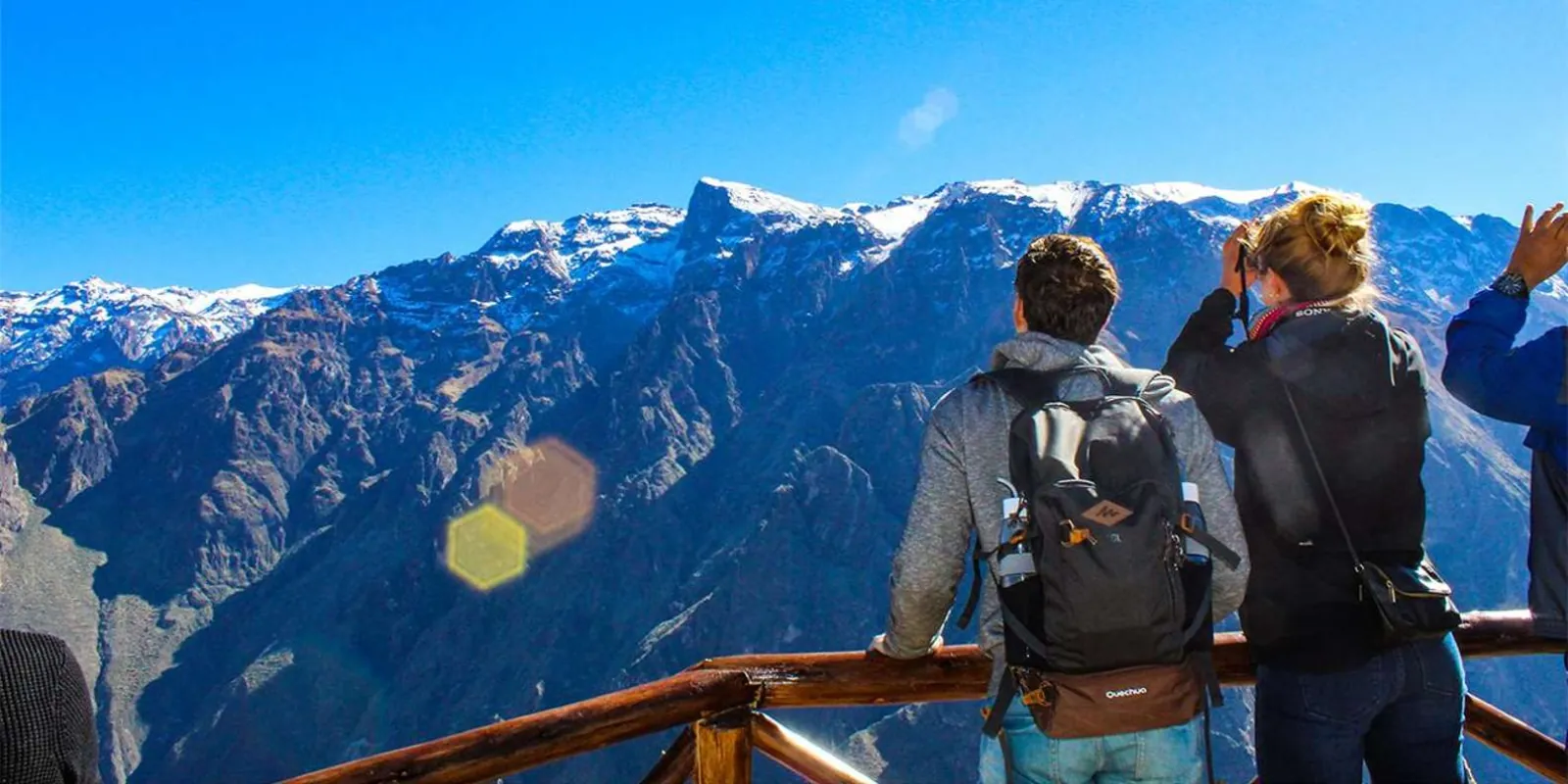
The Colca Valley is not one climate zone. A tour from Arequipa crosses exposed, high-altitude ground before reaching Chivay and the canyon viewpoints, and a hiker on the canyon floor can be much warmer than someone standing at a windswept pass or lookout.
The rainy season also does not mean constant rain every day. You may get clear views, sun, low cloud, showers or several of these on one journey. Weather can change fast, and there is no reliable rule that it only rains in the afternoon.
Wet-season effects you may notice:
- Greener terraces and valley slopes. Rain changes the look of the landscape compared with the drier months.
- Cloud and intermittent mist. The canyon can look atmospheric, but a famous viewpoint can be completely hidden at times.
- Cold, wet spells at altitude. A rain jacket does not replace warm layers; the high stretches of the route can be very cold.
- Slippery rock, mud and uneven steps. This matters most on the classic trekking routes from Cabanaconde down to the canyon floor.
- Uncertain travel times. Heavy rain on high mountain roads can mean slow traffic, diversions or closures.
Peru’s meteorological agency, SENAMHI, has issued alerts for heavy rain in the Arequipa highlands and valleys, including warnings about swollen streams and affected roads, such as its 14 January 2026 alert for moderate to heavy rain. Alerts like this show the type of seasonal risk; they do not predict that a particular January or February departure will be disrupted.
Colca Canyon weather: November to March month by month
This is a planning comparison and gives no rainfall forecast. Actual conditions depend on each year’s weather.
| Month | General seasonal pattern | Best approach |
|---|
| November | Transition from the drier months; showers become more likely | A good month for a normal sightseeing itinerary, with a backup plan |
| December | Wet-season conditions increasingly likely; cloud and showers more frequent | Prefer a flexible overnight itinerary if your schedule allows |
| January | Typically one of the wetter months; more chance of trail and road disruption | Prioritize road-accessible sightseeing; check any trek carefully |
| February | Often among the wettest months; visibility and access can vary | Make booking flexibility and a weather backup central to your decision |
| March | Rain may continue, although conditions can gradually improve | Check actual forecasts; do not assume the wet season has ended |
November: a shoulder-season compromise
November suits travelers who want to see Colca Canyon before the heart of the wet season. The main viewpoints can still be clear, with newly green landscapes and occasional rain. Our November guide covers the month in more detail.
Best for: sightseeing travelers who can accept changeable weather and do not need a perfect clear-sky photograph.
Watch out for: the transition differs from year to year. A late-November trek can still be affected by sustained rain, so ask for route-specific advice.
December: still worth considering, with uncertainty
December can be a rewarding time for valley scenery, village visits and a night in Chivay or Yanque. Rain and reduced visibility become bigger planning factors. Our guide to Colca in December covers Christmas and New Year departures.
Best for: a two-day tour with time for local communities and the landscape, even if condor views are limited.
Watch out for: holiday travel puts pressure on hotels and transport. Check booking terms and availability around Christmas and New Year; ordinary departure schedules may not apply.
January: plan for flexibility
January sits in the wetter period in the southern Peruvian Andes. Heavy showers can affect hiking surfaces and roads, and cloud can make canyon views unpredictable. The January and February guide looks at the two wettest months together.
Best for: travelers who choose a sightseeing tour with a sensible weather policy and leave room in the itinerary for changes.
Watch out for: a trekking product advertised online is not proof that conditions will be safe on your date. Ask which sections are checked, whether recent rain has affected access and who makes the final go or no-go decision.
February: the highest disruption risk
February is often a particularly wet month in the Andes. Not every day is a washout, but February is the month least suited to travelers with no flexibility who want to finish a steep, exposed trek.
Best for: travelers who value scenery, villages and culture as much as a particular viewpoint or trek.
Watch out for: a short burst of intense rain can matter more than a week’s average forecast. Local reports of landslides, unsafe paths or rising water override your original schedule.
March: do not assume the trails are dry
March is transitional in some years, but the rainy season can persist. Rivers, muddy trails and unstable slopes can stay hazardous after several days of rain, even on a sunny day.
Best for: flexible travelers who can confirm current conditions shortly before their visit.
Watch out for: a dry morning after prolonged rain is not proof that a steep path or stream crossing is safe.
Is Colca Canyon worth visiting in the rainy season?
It is most worthwhile when you pick the right kind of tour and expect changeable views. The wet season gives you a different Colca Canyon, and not necessarily a worse one. Our best-time guide compares the wet months with the dry season.
Reasons to go
- Green scenery: terraces and hillsides can be more vivid where farming and seasonal growth respond to the rain.
- Interesting skies for photography: cloud adds depth and atmosphere, although it can also hide key views entirely.
- More than condors: traditional villages, highland landscapes, local food and hot springs can still be enjoyable when the weather allows.
- Road-based options: many Colca visits involve no descent to the canyon floor. A viewpoint tour is a very different undertaking from a steep trek, as our guide to Colca without trekking explains.
Reasons to reconsider
- You have only one fixed day and would be deeply disappointed by low cloud at Cruz del Cóndor.
- Your trip depends on completing an unchanged two-day canyon-floor trek whatever the conditions.
- Your next flight, bus or hotel is scheduled so tightly that a road delay would cause serious problems.
- Someone in your group cannot manage the altitude, cold, early departure or uneven walking surfaces of the planned activities.
Verdict: a guided sightseeing trip can be a good rainy-season choice. A strenuous trek needs a cautious decision based on conditions.
Can you see Andean condors during the rainy season?
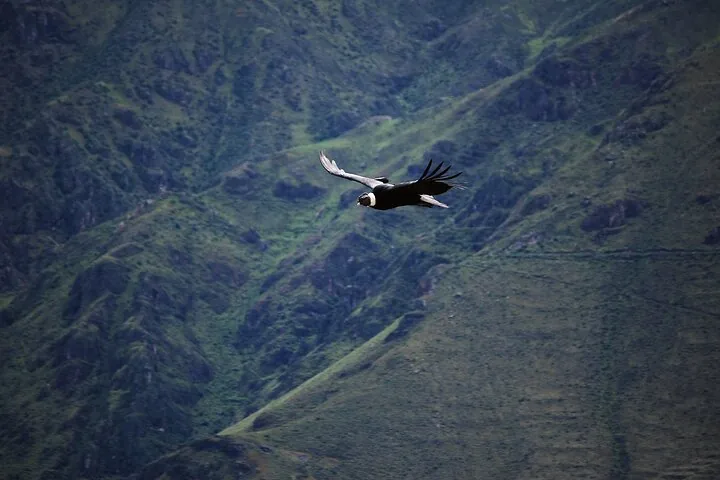
Yes, sightings remain possible, and no season guarantees them. The Andean condor is a wild bird and does not fly to a tour timetable. Weather, visibility and air currents all affect what you see.
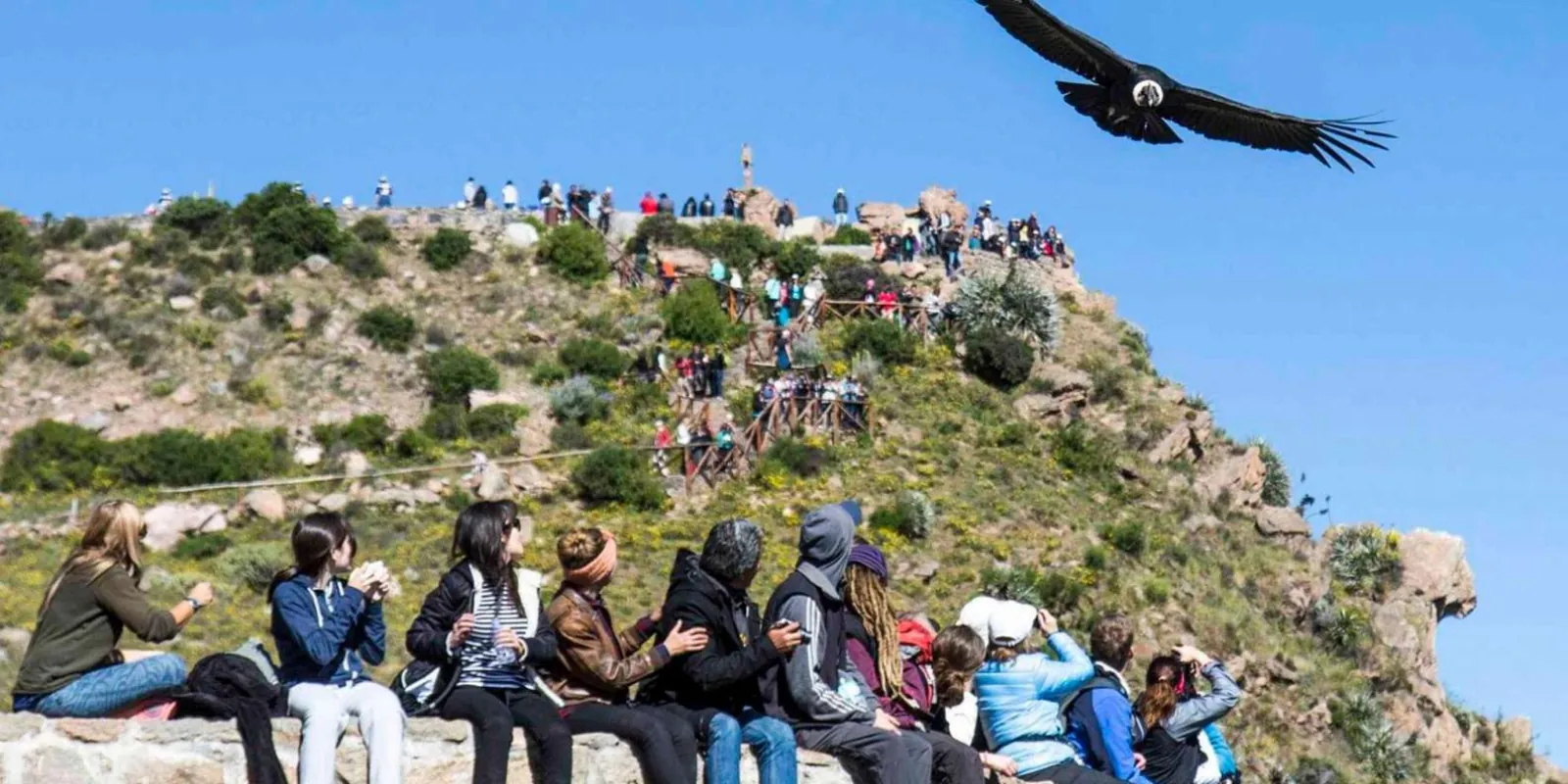
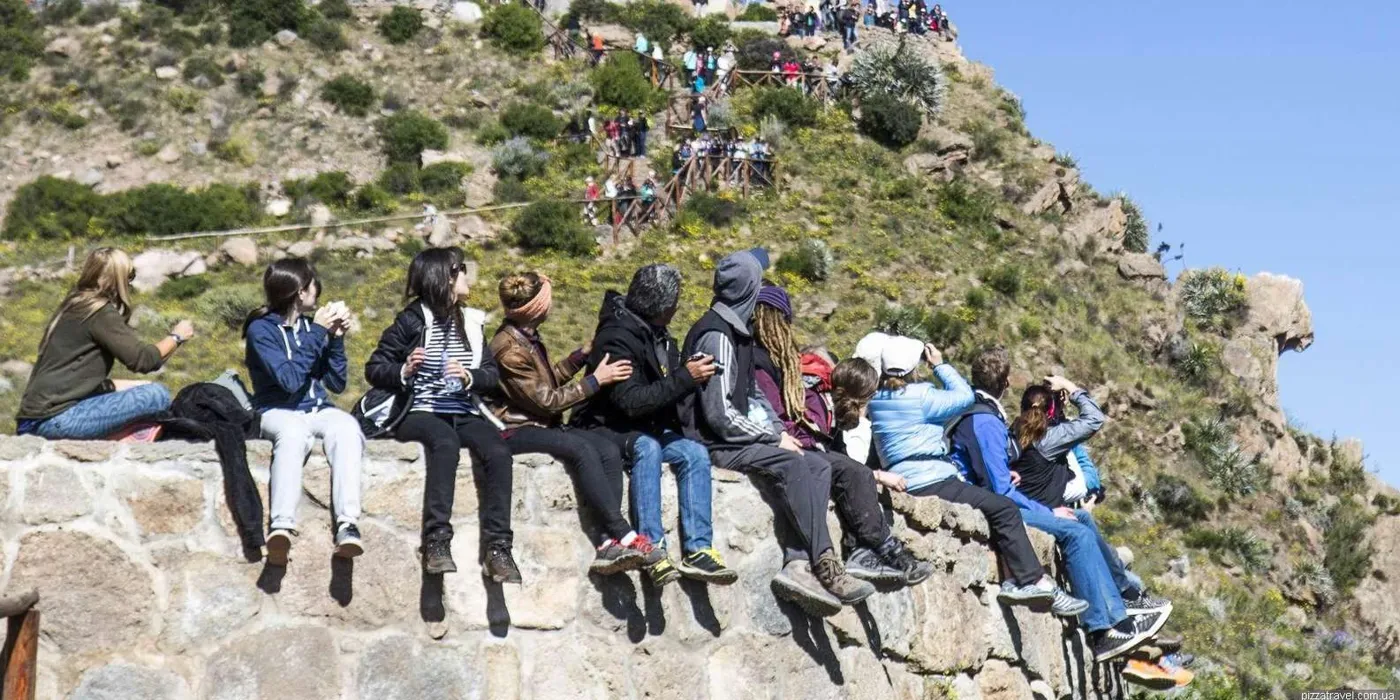
The best-known spot is Cruz del Cóndor, a road-accessible viewpoint beyond Chivay. Peru’s official tourism portal names early morning as the usual time to watch for condors, which is why so many sightseeing trips leave Arequipa before dawn or spend a night in the valley.
In wetter weather:
- Cloud can hide the canyon walls even when birds are present.
- Condors may be harder to see or fly at different times when wind and rising air change.
- A few minutes at the viewpoint may not be long enough to know whether conditions will improve.
- Waiting longer is not safe if rain, lightning or road conditions are getting worse.
Booking tip: ask how long the tour normally spends at Cruz del Cóndor and what happens if the viewpoint is fogged in. A good operator tells you sightings are not guaranteed. A longer, flexible stop can improve your visit, but it cannot promise a sighting.
If condor photography is your top priority, the drier months generally give more dependable visibility than January or February.
Is Colca Canyon trekking safe in the rainy season?
There is no blanket yes or no. The answer depends on the exact route, recent rainfall, the forecast, local notices, your group’s experience and the guide’s assessment. Colca treks are not flat walks: the usual routes involve long descents, loose surfaces and a demanding climb back out.
During and just after heavy rain, hazards can include:
- Slick stone steps or packed-earth switchbacks
- Muddy or eroded paths and small rockfalls
- Poor visibility on exposed sections
- Unstable slopes and blocked paths
- Sudden changes in stream or river levels
- Delays that leave hikers walking in the dark
The classic two-day trek, such as the From Arequipa: 2-day Colca Canyon Trekking Tour (from US$60, 4.5/5 from 256 reviews), is especially demanding because most of the climb back toward Cabanaconde falls on the second morning. A three-day itinerary, such as the 3-day trek on Viator, from US$110, 4.8/5 (65), allows a gentler pace, but more days do not remove weather hazards. An operator can change the route, postpone a departure or decide not to run the trek. Our rainy-season trekking guide covers the questions to ask before you commit.
When should you avoid trekking?
Do not go ahead if local authorities or guides report a closure, unstable slopes, impassable bridges or unsafe water levels. Never cross a swollen stream or try to get around a closure on your own. If the forecast shows severe weather and your operator has no credible backup plan, choose another activity or reschedule.
An independent trek is not automatically cheaper once you count safety, navigation, transport and the chance of changing plans. If you do not know the trails, be especially wary of setting off alone in unstable conditions; our self-guided trek guide explains what that involves.
A road-based alternative to a canyon-floor trek
Choose a road-based sightseeing tour that visits terraces, villages, viewpoints and, if it is open, the La Calera hot springs. You see much of what makes Colca memorable without the steepest trails. If the canyon floor is your must-see, consider moving the trek to a drier month.
One-day or two-day Colca Canyon tour in the rainy season?
Both work, with different compromises.
| One-day sightseeing tour | Two-day sightseeing tour |
|---|
| Main advantage | Fits into a short Arequipa stay | More time in the valley and a less compressed day |
| Main drawback | Very early departure and a long day in a vehicle | An overnight stay and a higher cost |
| Weather flexibility | Limited; a foggy viewpoint can dominate the day | Extra time for villages and alternative stops |
| Typical activities | Cruz del Cóndor and roadside stops | Valley villages, a night in the valley and a morning condor visit |
| Best suited to | Travelers with fixed, short itineraries | First-time visitors who can spare two days |
| Our pick | Full-day tour with meals, from US$42, 4.6/5 (1,814) | Colca Canyon Plus on Viator, from US$104, 4.9/5 (353) |
For many rainy-season visitors, a two-day sightseeing tour is the more forgiving choice, as long as its terms are clear and it is operating. The night is usually in Chivay or Yanque. It is a different product from a two-day trek into the canyon. The full-day From Arequipa: Colca Canyon Full-Day Guided Tour with Meals (from US$42, 4.6/5 from 1,814 reviews) suits you if you only have one day; the Colca Canyon Plus two-day tour (from US$104, 4.9/5 from 353 reviews) costs more but gives you a valley night and a second chance at the viewpoint. Our one-day vs two-day comparison goes into the trade-offs.
What about traveling independently?
You can reach Chivay by road and arrange onward travel yourself, but dealing with bad weather becomes your job. On public transport, allow extra time for transfers and confirm departure points and road conditions locally; our Arequipa to Colca by bus guide has the details. Trekkers heading for Cabanaconde can also book the Transport from Arequipa to Cabanaconde (from US$25, 4.4/5 from 71 reviews).
Peru’s official visitor information lists Arequipa to Chivay at about 151 km and Chivay to Cruz del Cóndor at about 42 km farther. These are route distances only, and wet-season journeys can take longer. Never treat a tour’s published return time as a safe buffer before a flight that leaves straight afterward.
What if roads close or your tour is cancelled because of rain?
Road and tour disruption in the rainy season is possible, not inevitable. The UK Foreign, Commonwealth & Development Office warns that wet-season conditions in the Andes can interrupt road transport and tourist activities, and SENAMHI issues short-term alerts for heavy rain in the highlands.
If you hear of a closure or a severe weather warning:
- Check whether it applies to your exact road and date. A regional warning does not mean every Colca route is closed.
- Ask the operator for a written update: planned departure, affected section, revised itinerary and who made the safety call.
- Do not pressure a driver or guide to bypass a closure. Accept official restrictions and local safety advice.
- Keep onward plans flexible. Leave a buffer before flights, long-distance buses and other prepaid activities.
- Review your booking terms and insurance. A refund, new date or credit depends on the product and its terms; rain does not automatically trigger a refund.
For current information, check SENAMHI, the Ministry of Transport and Communications, the UK’s Peru travel advice and your operator’s updates. When the picture is unclear, ask your hotel in Chivay or Cabanaconde too.
Five questions to ask before booking
- Does the tour run in my month, and how close to departure is the final weather decision made?
- If Cruz del Cóndor is foggy or closed, which other stops are included or substituted?
- Is this a road sightseeing tour or a canyon-floor trek, and how much steep walking does it involve?
- What are the refund, date-change and weather-cancellation terms, in writing?
- Are the Colca tourist ticket, hot springs, meals, accommodation and onward transfers included in the price?
A low advertised price is not the same as a clear, flexible booking. Our guide to choosing an operator shows what to look for in reviews.
How much does a rainy-season Colca Canyon visit cost?
Tour prices change with the operator, inclusions, group size and date, so compare the total cost of each option. Our Colca tour prices guide breaks down the typical figures.
The Colca tourist ticket (Boleto Turístico), run by AUTOCOLCA, is easier to pin down. Its published adult rates when this guide was checked:
| Visitor category | Published ticket price |
|---|
| International visitor from outside Latin America | S/70 |
| Latin American visitor | S/40 |
| Peruvian adult | S/20 |
Lower rates apply to some groups, including foreign children aged 6 to 15 and foreign residents of Peru (S/20 each). Carry identification and confirm the latest prices and how to pay before you set off.
The ticket covers entry to the visitor circuit but not your guide, vehicle or admission to La Calera hot springs. Accommodation, meals and return or onward transport may also cost extra.
What to pack for Colca Canyon from November to March
Pack for rain, strong sun and cold high-altitude air on the same trip. The canyon floor and the high road can feel completely different. Our Colca packing guide has the full list.
For any sightseeing trip:
- Lightweight waterproof jacket with a hood, plus a compact rain cover for your daypack
- Warm insulating layer for early departures and high viewpoints
- Comfortable shoes with good grip on wet stone and short walks
- Sun hat, sunglasses and high-SPF sunscreen
- Refillable water bottle, snacks and small cash in Peruvian soles
- Dry bag or pouch for your passport, electronics and essential medication
- Charging cable or power bank for long travel days
- Quick-drying clothes; heavy cotton stays damp
If a trek is confirmed safe and running, add proper hiking footwear, a waterproof pack liner, traction suited to the route, walking layers and any gear your guide specifies. A cheap disposable poncho is not enough for a remote, steep hike.
Altitude matters, even on a tour without trekking
Weather is not the only consideration. Arequipa sits at about 2,300 m, Chivay at roughly 3,600 m, and the road to the valley crosses high ground near 4,900 m at Patapampa. If you come straight from sea level, the altitude can affect you even if you only sit in a vehicle and stop at viewpoints.
Altitude illness can cause headache, nausea, dizziness and unusual tiredness. The CDC Yellow Book recommends gradual acclimatization where possible, and being fit does not protect you.
Do not go higher to sleep if you have symptoms. If symptoms get worse, or someone becomes confused, has trouble walking or is breathless at rest, get urgent medical help and descend. If you have a relevant medical condition, talk to a doctor about rapid high-altitude travel before the trip. Our altitude sickness guide covers the route’s heights.
In wet weather, cold and slow transport make symptoms harder to manage. Plan reasonable rest and a way out instead of relying on willpower to finish a trek.
A two-day rainy-season itinerary without a canyon-floor hike
If you can spare a night, this plan stays interesting even when a viewpoint is clouded over. Treat it as a sample itinerary, since not every stop will necessarily be open on your dates.
Day 1: Arequipa to the Colca Valley
Take a confirmed transport service or sightseeing tour toward Chivay. Depending on the weather and the road, you may see high plateau scenery and the Salinas y Aguada Blanca reserve. Allow for a slow journey and avoid a long run of stops at very high altitude.
Settle into a hotel in Chivay or Yanque; our Chivay travel guide and where-to-stay guide compare the towns. Take a short walk around town or have a local meal. If they are open and reachable, La Calera hot springs make a pleasant optional visit; entry is extra, and you should confirm closing times.
Day 2: Condor viewpoint, villages and return
Drive to Cruz del Cóndor if conditions and the road allow. Spend time watching the landscape and do not count on a condor sighting. On the way back, stop at road-accessible viewpoints or villages when conditions are suitable.
Return to Arequipa, or use a specifically booked onward connection if you are heading to Puno, such as the Colca Canyon: 2-Day Tour from Arequipa to Puno (from US$107, 4.8/5 from 51 reviews). A standard round-trip tour will not drop you in another city.
If the weather changes: accept an alternative stop or a shorter sightseeing day instead of entering a hazardous road or trail. If you have an important flight, consider moving Colca earlier in your Peru itinerary so you have a buffer.
Should you visit in the rainy season or wait for the dry season?
The answer depends on what you most want from the trip.
| Your main goal | Better choice |
|---|
| Viewpoints, villages, green landscapes | A wet-season trip can be worthwhile with flexible expectations |
| Condor photography with clearer visibility | The drier months usually give a more reliable chance, never a guarantee |
| Two- or three-day canyon-floor trekking | Choose a season with more stable trail conditions and get a route-specific safety check |
| One fixed day with a flight straight afterward | Move Colca earlier in the trip or allow a buffer |
| A relaxed scenic trip with a night in the valley | Two-day sightseeing usually fits better than a rushed day tour |
If you are traveling in November, the seasonal compromise can be attractive. In January or February, you need to be comfortable with uncertainty and ready to change or skip risky activities. For a hiking-first holiday, a more stable season is often the better decision.
Plan the trip around conditions, not just the calendar
Colca Canyon is worth considering from November to March if you want memorable scenery and are ready for the weather to shape your itinerary. November is usually a good seasonal compromise. From December to March, and especially in January and February, road-based sightseeing with a night in the valley is easier to adapt than a demanding canyon-floor trek.
The best wet-season booking is not necessarily the cheapest or the longest. Look for a clear itinerary, honest expectations about condors, transparent inclusions and cancellation terms, and an operator who puts safety ahead of the original schedule.
Choose the trip that suits the conditions you meet
, and Colca Canyon can still be a highlight of southern Peru. Check your exact dates with the operator shortly before you go, because roads and trails can change after a single heavy storm.
Sources
Sources checked 8 November 2026. This is seasonal guidance and gives no real-time road or weather update.
- SENAMHI: Arequipa regional climate forecasts, for official forecasts and seasonal context. Check current alerts near departure.
- SENAMHI: Arequipa highlands and valleys rain alert, 14 January 2026, an example of warnings for heavy rain, higher stream flows and disruption to high roads. It is not a forecast for the coming season.
- UK Foreign Office: Peru safety and security, on rainy-season transport disruption and monitoring local warnings.
- US State Department: Peru travel advisory, on wet-season landslide and flood risk in mountain areas.
- Peru’s official tourism website: Colca Canyon, for travel distances and the main attractions.
- AUTOCOLCA: official Colca tourist ticket, for prices, eligibility, what the ticket covers and exclusions.
- CDC Yellow Book: high-altitude travel and altitude illness, for altitude risk and acclimatization advice.